THANAVATTAM Folk Fest – 2026: Ritual, Rhythm, and Living Traditions of Kuthiyottam
Folkland
Editor
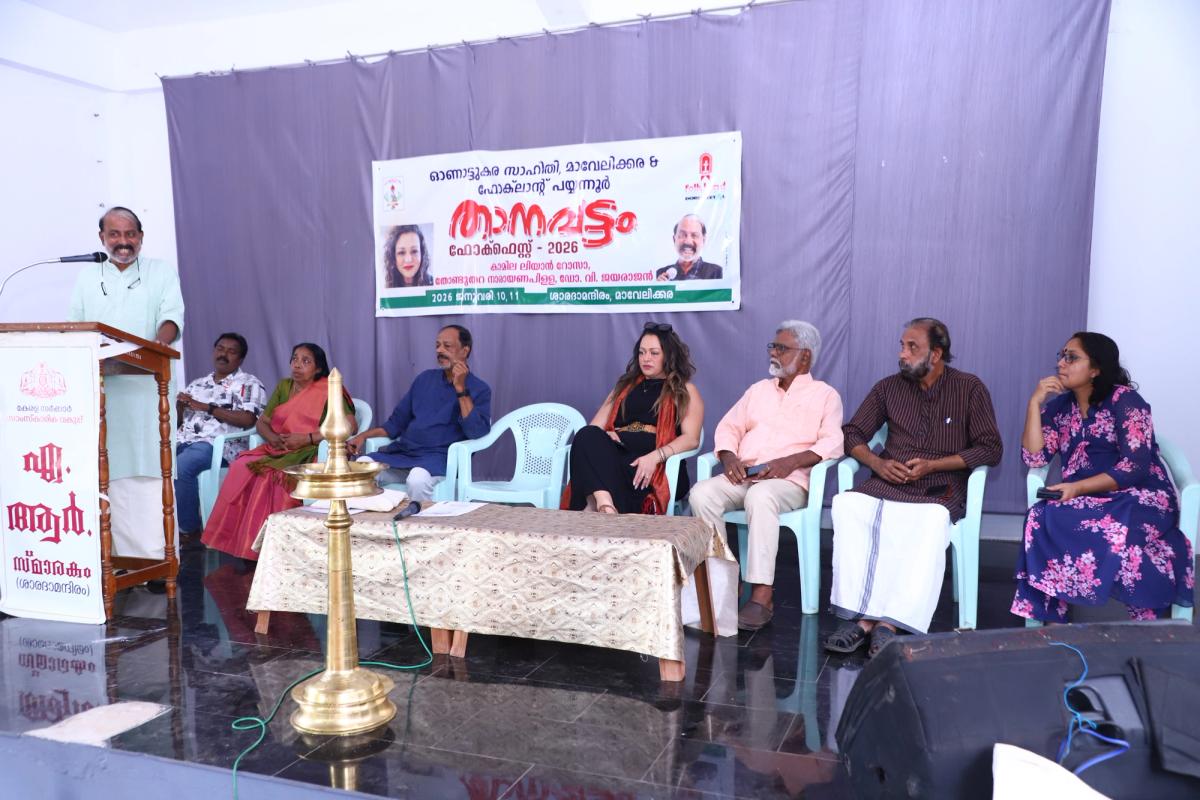
Thanavattam Folk Fest – 2026 functioned as an integrated platform for the safeguarding, documentation, and transmission of Kerala’s ritual and folk heritage, with particular focus on the ritual art form Kuthiyottam. Through scholarly seminars, practitioner-led demonstrations, documentary screening, and live performances, the festival facilitated meaningful dialogue between tradition bearers, researchers, and the public. By foregrounding ritual knowledge, embodied practice, and endangered folk expressions such as Vamana Nritham, the festival reaffirmed the importance of community participation and intergenerational transmission in sustaining Intangible Cultural Heritage.
Kuthiyottam is a deeply ritualistic youth performance traditionally enacted during major temple festivals of south Kerala, most prominently during Attukal Pongala and Chettikulangara Bharani. As part of this ritual observance, young boys undergo a period of strict ascetic discipline, culminating in a symbolic enactment of sacrifice offered to Goddess Bhadrakali/Durga. Integrating devotion, physical endurance, musicality, and collective memory, Kuthiyottam remains one of the most powerful and emotionally resonant ritual traditions of Kerala.
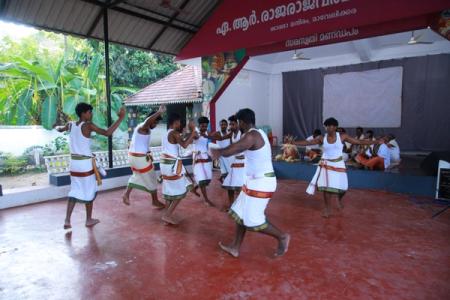
The folk fest derived its title, “Thanavattam,” from a central rhythmic and structural principle of Kuthiyottam. The ritual performance is organised around four rhythmic cycles known as Thana Vattams. Each vattam provides a precise rhythmic framework to which the dancers’ movements, gestures, steps, and ritual enactments are meticulously synchronised. This rhythmic architecture not only governs the performance but also embodies the spiritual and aesthetic discipline intrinsic to the ritual. The overarching aim of the Folk Fest was to bring together ritual practitioners, artists, scholars and the wider public, creating a meaningful dialogue between academic research and living performance traditions. In doing so, the folk fest sought to contribute to the documentation, interpretation, and continued vitality of Kerala’s ritual and folk arts.
Day One – Seminar and Scholarly Engagements on Kuthiyottam
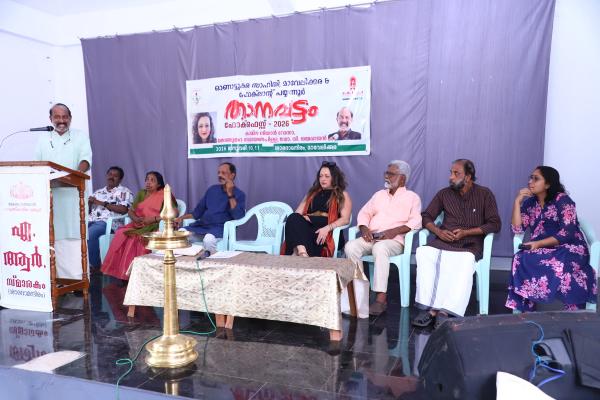
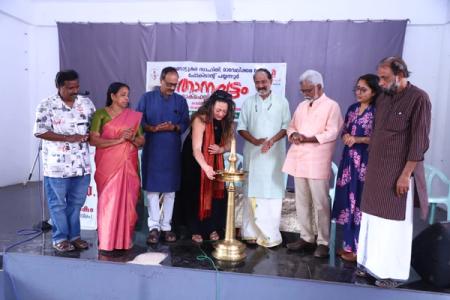
The folk fest opened with an inaugural session marked by thoughtful reflections on the relevance of folk rituals in contemporary cultural and academic contexts. Mr. Sasikumar Mavelikkara, Secretary of Onattukara Sahithi, delivered the Welcome Address, setting the tone for the proceedings. The Presidential Address by Dr. Madhu Iravankara, President of Onattukara Sahithi, underscored the enduring cultural value of ritual arts and their importance as sites of collective memory and knowledge transmission.
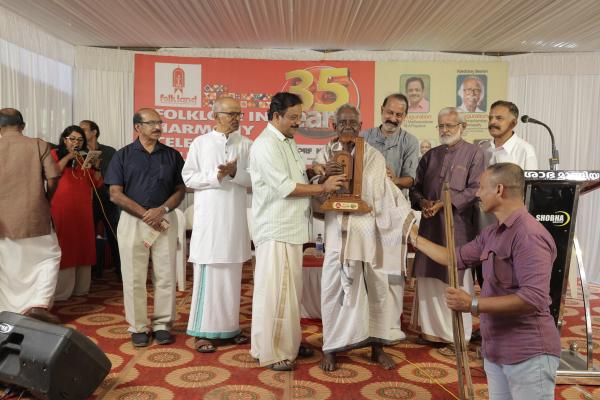
The Introductory Address was delivered by Dr. V. Jayarajan, Chairman of the Folkland International Centre for Folklore and Culture, Payyanur, who outlined the conceptual framework of the fest and highlighted its scholarly significance. The folk-fest was formally inaugurated by Mr Thonduthara Narayana Pillai, an eminent and veteran Kuthiyottam artist, whose presence symbolised the continuity of the tradition. This was followed by the felicitation of senior Kuthiyottam artists in recognition of their lifelong dedication to preserving and transmitting this ritual art.
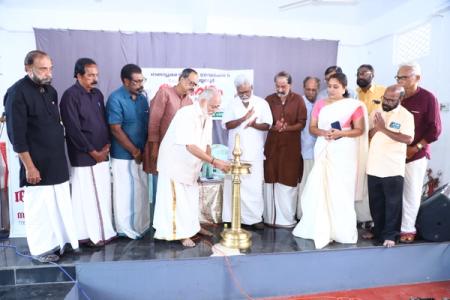
The thematic orientation of the folk-fest was introduced by Mr. George Thazhakkara, Treasurer of Onattukara Sahithi. A special Honouring Ceremony was then conducted to acknowledge distinguished contributors to the field of Kuthiyottam and folk studies. The honourees included: • Mr. Thonduthara Narayana Pillai • Mr. Mandathil Ravindran Pillai • Mr. Mohanan Pillai • Dr. K. P. Madhusoodanan Pillai • Mr. R. Gopalakrishnan Nair
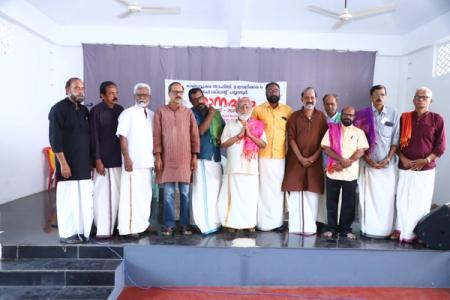
The honouring ceremony was followed by felicitation speeches by invited dignitaries, reflecting on the cultural, pedagogical, and spiritual dimensions of Kuthiyottam.
Academic Seminar
The academic seminar on Kuthiyottam was conducted in two sessions and was moderated by Mr. K. K. Sudhakaran, Vice President of Onattukara Sahithi, and Mr. Suresh Mannarasala. The seminar featured a rich array of scholarly presentations that examined Kuthiyottam from multiple perspectives, including narrative, devotional, cultural, historical, and aesthetic dimensions.
The presentations included:
- Exploring the Narrative Songs of Devi Mahathmyam – Mr. Harikumar Ilayidath
- The Concept of Motherhood in Kuthiyottam Songs – Dr. Manju V. Madhu
- What Do Kuthiyottam Songs Offer to the Audience? – Dr. R. Sivadhasan Pillai
- Kuthiyottam and the Devotional Heritage of Kerala – Dr. N. Sreeranjini Mannar
- Kuthiyottam and Agrarian Culture – Dr. Pradeep Iravankara
- Kuthiyottam of Onattukara: A History of Metrical Purity and Cultural Richness – Dr. Jijin B. Krishna
- Kuthiyottam: A Sculptural Perspective – Dr. Rajesh Kumar M.
- Chuvadukal (Steps) in Kuthiyottam and Padayani – Sri. Roopesh Kumar R.
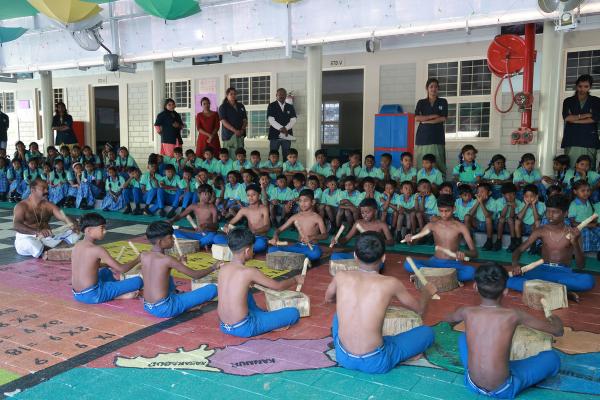
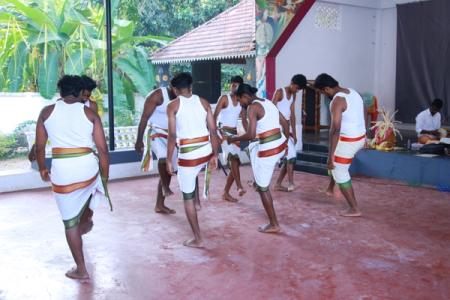
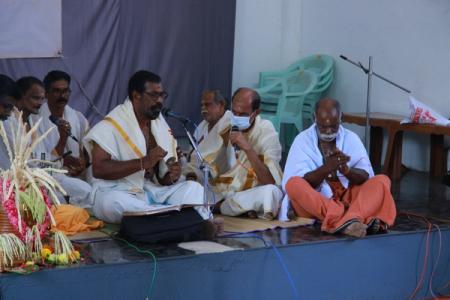
A special demonstration session was conducted by Mr. R. Gopalakrishnan Nair and team of Sreedevi Vilasam Kuthiyottam Samithi, Irezhu Vadak, Chettikulangara, who demonstrated Kuthiyottam songs and ritual steps. This experiential session enabled participants to gain an embodied understanding of the performative grammar and rhythmic discipline of the ritual.
The first day concluded with the screening of the documentary film “Kuthiyottam,” directed and scripted by Dr. Madhu Iravankara a noted writer, film critic, and documentary filmmaker. The screening was followed by an interactive discussion that offered valuable visual, ethnographic, and interpretative insights into the ritual tradition.
Day Two – Folk Art Performances and Valedictory Session
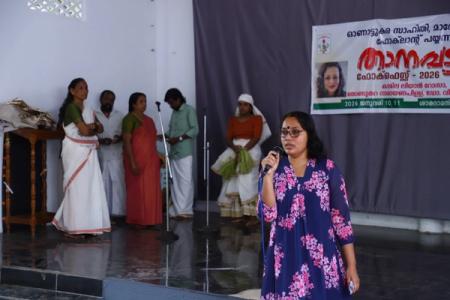
The second day of the folk-fest was devoted to live folk performances, presented by the K. P. Karunakaran Memorial Vamana Nritha Kalakendram, Puthuppally, Kottayam, and introduced by Dr. Sheena G., Co-ordinator of Folk Fest – 2026.
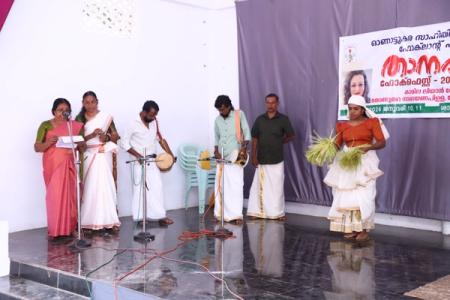
The central performance was Vamana Nritham, also known as Onnam Thullal, a centuries-old folk-art tradition of the Central Travancore region, historically performed by the Velan community and associated with the Onam festival season. This rare tradition consists of three integrated performance components: Onnam Thullal, Ammanattam, and Nokkuvidya, each reflecting different layers of ritual, rhythm, skill, and storytelling. Vamana Nirtham is a rare and visiting folk tradition, especially associated with the Onam festival season, and today only a handful of practitioners remain who can perform it in its complete form.
The first phase, Onnam Thullal, is a traditional dance form performed by a female artist. The performer carries lotus-shaped tender tassels made from coconut palm leaves, which add visual grace to the performance. She dances in perfect coordination with the rhythmic beats of the thudi (a traditional percussion instrument) and the brass plate, creating a vibrant rhythmic atmosphere. The movements are gentle yet expressive, embodying ritualistic devotion and festive spirit closely linked to Onam celebrations.
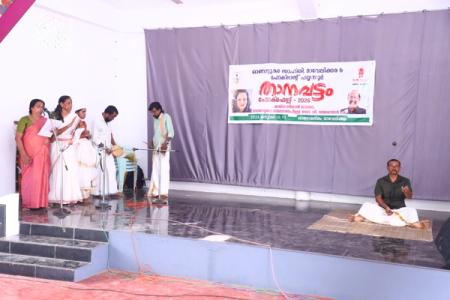
 The second phase of the performance is Ammanattam, a highly skilled and rhythm-intensive art form. In this segment, the woman performer sits in a fixed posture and rhythmically throws and catches Ammanakaya (wooden balls) with increasing speed and precision. The performance demands exceptional concentration, balance, and hand-eye coordination, as the wooden balls must be caught without falling to the ground. While executing this demanding act, verses from the Ramayana—comprising 86 lines—are sung, blending physical dexterity with oral narrative tradition and devotional storytelling.
 The third and final phase is Nokuvidhya, one of the rarest forms of traditional puppetry in Kerala. In this segment, the performer manipulates small puppets fixed on a rod, which is delicately placed between the nose and upper lip. This extraordinary technique requires years of rigorous practice and physical discipline. The puppets are animated in harmony with the accompanying music played by musicians seated around the woman puppeteer. The subtle movements of the puppets, controlled through facial balance and rhythmic timing, create a mesmerizing visual experience for the audience.
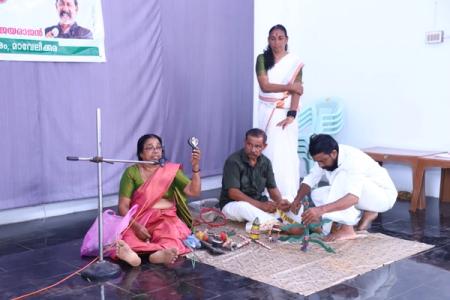 Today, Nokuvidhya is on the verge of extinction, with only a few surviving artists who possess this rare knowledge and skill. The complete presentation of Vamana Nirtham, encompassing all three elements, stands as a powerful reminder of Kerala’s rich intangible cultural heritage
The performance featured traditional songs by Mrs. Chemakakutty Gopalan and Mrs. Krishnamma Shaji, thudi accompaniment by Mr. Sanal Pariyaram and Mr. Girish Gopal, Onnam Thullal by Ms. Gadhadevi, and Ammanattam by Mr. Sanjeevkumar, captivating the audience with its rare aesthetic and cultural richness.
Folkland, in association with Onattukara Sahithi, has played a vital role in revitalising this endangered tradition. An interactive session introducing the artists and their practice followed the performance.
Today, Nokuvidhya is on the verge of extinction, with only a few surviving artists who possess this rare knowledge and skill. The complete presentation of Vamana Nirtham, encompassing all three elements, stands as a powerful reminder of Kerala’s rich intangible cultural heritage
The performance featured traditional songs by Mrs. Chemakakutty Gopalan and Mrs. Krishnamma Shaji, thudi accompaniment by Mr. Sanal Pariyaram and Mr. Girish Gopal, Onnam Thullal by Ms. Gadhadevi, and Ammanattam by Mr. Sanjeevkumar, captivating the audience with its rare aesthetic and cultural richness.
Folkland, in association with Onattukara Sahithi, has played a vital role in revitalising this endangered tradition. An interactive session introducing the artists and their practice followed the performance.
Valedictory Session
The folk-fest concluded with the Valedictory Session. Dr. Madhu Iravankara, President of Onattukara Sahithi, delivered the Welcome Address, followed by the Presidential Address by Dr. V. Jayarajan, Chairman of Folkland International Centre for Folklore and Culture, Payyanur. The Chief Guest, Mrs. Camila Leal Rosa, Director of Abra Soffa, Brazil, and International Advisory Board Member of Cultural Masters, addressed the gathering, highlighting the global relevance of indigenous, ritual and folk-art traditions. Adv. T. N. Deviprasad, Joint Secretary of Onattukara Sahithi, and Sri. Kavalam Sivadasan offered felicitations. The artists were honoured with silk shawls in recognition of their contribution to folk culture.
 Thanavattam Folk Fest – 2026 emerged as a significant cultural and academic platform that successfully integrated scholarly discourse with living performance practice. By foregrounding Kuthiyottam as a vibrant and evolving ritual tradition, the folk-fest made a meaningful contribution to its documentation, critical interpretation, and intergenerational transmission, reaffirming the urgent need to safeguard and sustain Kerala’s rich folk and ritual heritage.