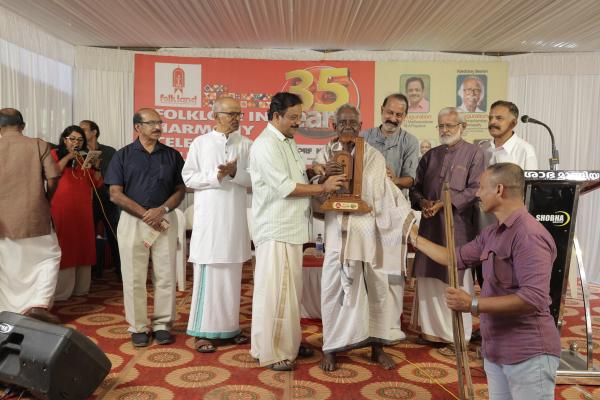
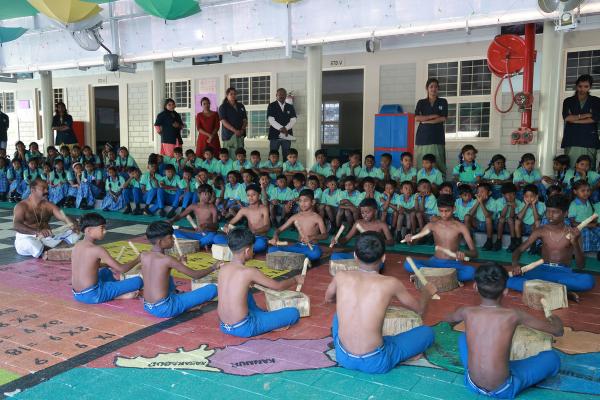
A Living Celebration of Heritage: Cultural Festival at Chettikulangara Devi Temple
Folkland
Editor
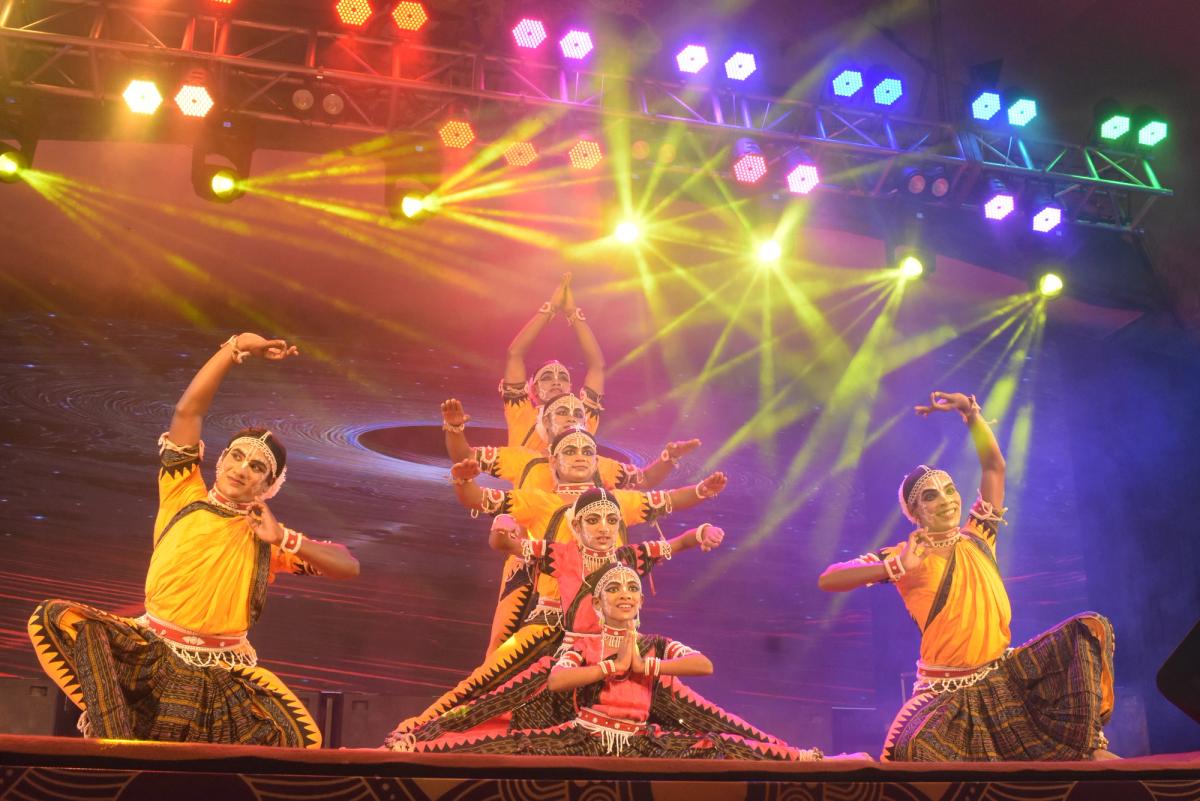
Rooted in sacred tradition and enriched by artistic expression, the Cultural Festival held at Chettikulangara Devi Temple as part of the Upanishad Geetha Mahasatram unfolded as a vibrant celebration of India’s living heritage. Transforming the temple precincts into a dynamic cultural space, the festival seamlessly brought together ritual practices, classical and folk arts, and community participation.
Featuring diverse traditions such as Gotipua, Baul music, Manipuri Raas Leela, Odissi, Ghoomar, Koraputia dance, and Kharsawan Chhau, the event highlighted the deep connection between spirituality, artistic expression, and everyday life. More than a series of performances, the festival emerged as a holistic cultural experience, reaffirming that heritage is a living, evolving force that continues to inspire and connect communities across generations.
Rooted in sacred tradition and enriched by artistic expression, the Cultural Festival organised in connection with the Upanishad Geetha Mahasatram emerged as a meaningful cultural journey celebrating Kerala’s ritual practices and folk arts. Hosted at the historic Chettikulangara Devi Temple, Mavelikkara, the festival transformed the temple precincts into a living cultural arena where heritage, devotion, and community participation blended seamlessly. The festival was organised by the Folkland International Centre for Folklore and Culture, with the CSR support of Dorf Ketal Chemicals India Pvt. Ltd., in association with the Chettikulangara Devi Temple.
 The festival offered a profoundly enriching experience to audiences drawn from diverse backgrounds. By bringing together ritual practices, living traditions, and performing arts, the event transcended the boundaries of a conventional cultural programme and evolved into a holistic celebration of heritage. The dynamic interaction between sacred rituals, traditional art forms, and the temple’s architectural milieu vividly illustrated how cultural heritage remains deeply embedded in everyday life and worship spaces. Both tangible elements—such as architecture, costumes, and musical instruments—and intangible dimensions—ritual knowledge, artistic expression, and collective memory—were meaningfully articulated through carefully curated performances.
The cultural programmes, presented under the title Vinodha Sadas (Entertainment Session), formed an integral component of the overall festival experience. These presentations enriched the spiritual ambience of the temple while reinforcing the festival’s commitment to preserving and presenting Kerala’s diverse cultural expressions.
Through this dynamic and living cultural expression, the festival reaffirmed the enduring relationship between spirituality, community life, and artistic traditions. It powerfully illustrated that heritage is not a static inheritance of the past, but a continuously evolving force shaping contemporary social and cultural consciousness.
The festival offered a profoundly enriching experience to audiences drawn from diverse backgrounds. By bringing together ritual practices, living traditions, and performing arts, the event transcended the boundaries of a conventional cultural programme and evolved into a holistic celebration of heritage. The dynamic interaction between sacred rituals, traditional art forms, and the temple’s architectural milieu vividly illustrated how cultural heritage remains deeply embedded in everyday life and worship spaces. Both tangible elements—such as architecture, costumes, and musical instruments—and intangible dimensions—ritual knowledge, artistic expression, and collective memory—were meaningfully articulated through carefully curated performances.
The cultural programmes, presented under the title Vinodha Sadas (Entertainment Session), formed an integral component of the overall festival experience. These presentations enriched the spiritual ambience of the temple while reinforcing the festival’s commitment to preserving and presenting Kerala’s diverse cultural expressions.
Through this dynamic and living cultural expression, the festival reaffirmed the enduring relationship between spirituality, community life, and artistic traditions. It powerfully illustrated that heritage is not a static inheritance of the past, but a continuously evolving force shaping contemporary social and cultural consciousness.
Gotipua: Sacred Youth Dance Tradition of Odisha
The festival opened with a captivating presentation of Gotipua, performed by the Baba Gorekhinath Gotipua Association, Puri, Odisha. Gotipua is a centuries-old folk dance tradition of Odisha, performed by young boys—typically below the age of fourteen—who adorn themselves in elaborate female costumes to present devotional compositions dedicated to Lord Jagannath and Lord Krishna. Deeply rooted in temple traditions, Gotipua is historically recognised as the precursor to the classical dance form Odissi, preserving its early stylistic elements, devotional ethos, and expressive vocabulary.
The dance form is distinguished by its unique synthesis of youthful masculine vigour and refined feminine elegance. This balance is achieved through intricate footwork, lyrical movements, expressive storytelling, and visually striking acrobatic poses. A traditional Gotipua repertoire begins with Mangalacharan, followed by Batu Nrutya, Pallavi, Abhinaya, and concludes with Moksha, symbolising spiritual liberation.
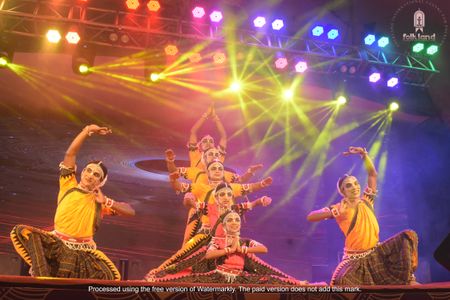 Live musical accompaniment featuring tabla, harmonium, flute, and devotional vocals enhanced the immersive quality of the performance. The tradition’s historical significance is underscored by the fact that many legendary Odissi masters, including Guru Kelucharan Mohapatra, began their artistic journeys as Gotipua dancers. Today, the form continues to be preserved through gurukuls, notably in Raghurajpur, ensuring the transmission of this sacred legacy.
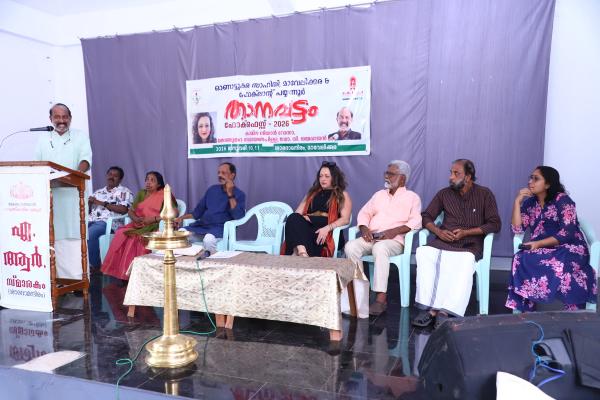
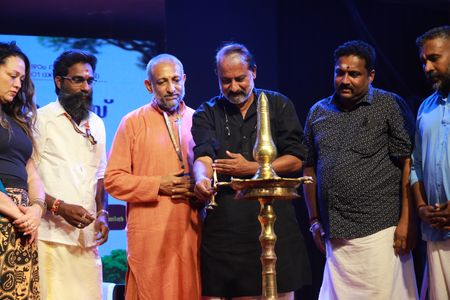
Inaugural Reflections and Classical Kuchipudi Presentation The Entertainment session of a day inaugurated by Dr. V. Jayarajan, Chairman of the Folkland International Centre for Folklore and Culture. In his address, he emphasised the importance of safeguarding both tangible and intangible cultural heritage, highlighting that cultural wealth resides not only in monuments and artefacts but also in living practices such as rituals, performing arts, oral traditions, and community knowledge systems. Mrs. Camila Leal Rosa (Director, Abra Soffa, Brazil, and International Advisory Board Member of Cultural Masters, Korea) was the distinguished guest on the occasion. In her address, she spoke on the sustainability of Kerala’s rich cultural heritage and traditional knowledge systems, underscoring their global relevance.
Baul Music: Mysticism and Inner Awakening
A deeply contemplative Baul music performance was presented by Reena Das Baul, Poornenthu Das, and Sudeep Das. Originating from the Bengal region, Baul music represents a mystical folk tradition that synthesises Bhakti, Sufi, and Tantric philosophies. Bauls believe that the divine resides within the human body and that spiritual realisation is attained through inner awakening rather than external rituals.
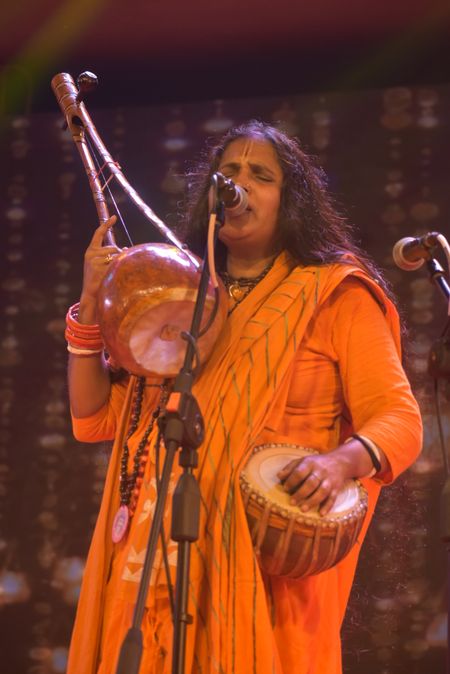 Accompanied by instruments such as the ektara, khamak, duggi, and cymbals, the performance created a serene soundscape that invited introspection. Recognised by UNESCO as an Intangible Cultural Heritage of Humanity, Baul music offered a profound spiritual counterpoint to the ritual and classical traditions presented during the festival.
Manipuri Raas Leela: Devotion in Graceful Motion
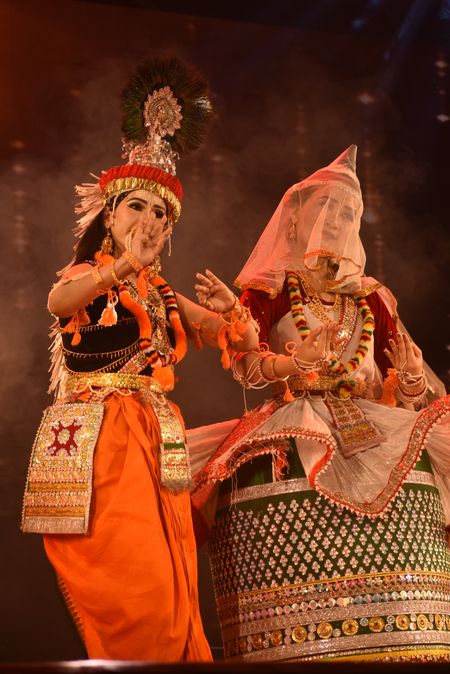 The festival featured Manipuri Raas Leela, presented by the Centre for Youth and Cultural Activities, Manipur. Deeply rooted in Vaishnavism, this classical dance-drama depicts the divine love of Radha and Krishna through restrained elegance, meditative calm, and lyrical expression.
Institutionalised by King Bhagyachandra, Manipuri Raas Leela retains its ritual sanctity while evolving as a refined classical form. Characterised by soft, fluid movements and subtle abhinaya, the dance emphasises collective harmony rather than dramatic intensity. The iconic Potloi costume, ornate head adornments, and devotional music transformed the stage into a sacred and contemplative space.
The festival featured Manipuri Raas Leela, presented by the Centre for Youth and Cultural Activities, Manipur. Deeply rooted in Vaishnavism, this classical dance-drama depicts the divine love of Radha and Krishna through restrained elegance, meditative calm, and lyrical expression.
Institutionalised by King Bhagyachandra, Manipuri Raas Leela retains its ritual sanctity while evolving as a refined classical form. Characterised by soft, fluid movements and subtle abhinaya, the dance emphasises collective harmony rather than dramatic intensity. The iconic Potloi costume, ornate head adornments, and devotional music transformed the stage into a sacred and contemplative space.
Odissi: Sculptural Grace and Devotional Aesthetics
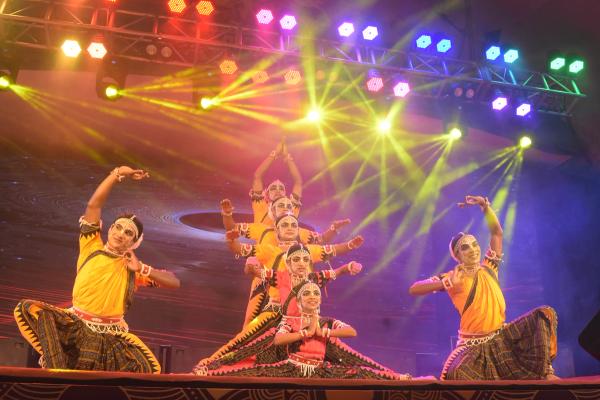
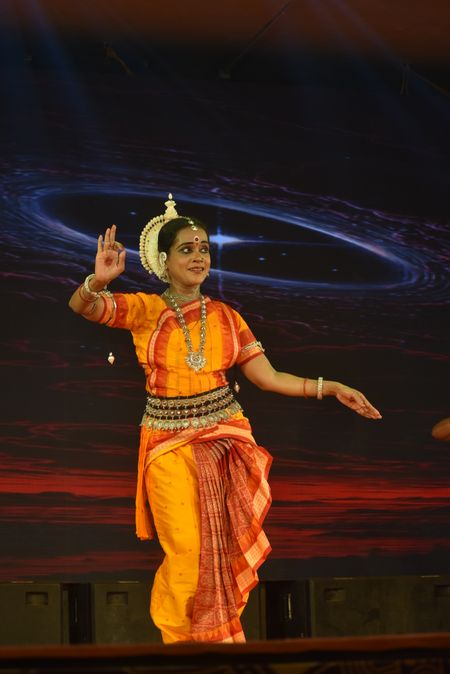 An evocative Odissi dance recital by Geetanjali Acharya and Seethal Sharma, presented in association with the Rag Virag Educational and Cultural Organisation, offered a deeply aesthetic experience. Rooted in Odisha’s temple culture, Odissi embodies devotion through fluid torso movements, intricate footwork, expressive mudras, and sculptural poses.
The performance sensitively explored the form’s foundational stances—Chowka and Tribhanga—balancing strength and grace. Through refined abhinaya and controlled transitions, the recital unfolded as a meditative journey, reflecting Odissi’s enduring spiritual and artistic resonance.
An evocative Odissi dance recital by Geetanjali Acharya and Seethal Sharma, presented in association with the Rag Virag Educational and Cultural Organisation, offered a deeply aesthetic experience. Rooted in Odisha’s temple culture, Odissi embodies devotion through fluid torso movements, intricate footwork, expressive mudras, and sculptural poses.
The performance sensitively explored the form’s foundational stances—Chowka and Tribhanga—balancing strength and grace. Through refined abhinaya and controlled transitions, the recital unfolded as a meditative journey, reflecting Odissi’s enduring spiritual and artistic resonance.
Ghoomar: Celebrating Feminine Grace and Community Joy
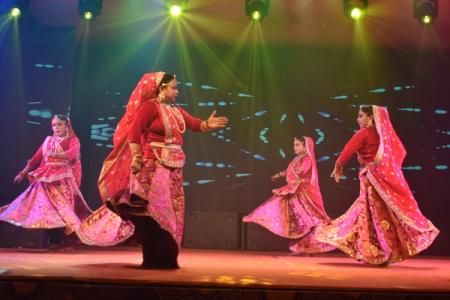 The vibrant folk tradition of Ghoomar was presented by the Rag Virag Educational and Cultural Organisation. Originating in Rajasthan, Ghoomar celebrates womanhood, collective joy, and social harmony. Traditionally performed during festivals and life-cycle rituals, the dance symbolises dignity, grace, and cultural continuity.
Graceful spinning movements, rhythmic footwork, and colourful Rajputi Poshak costumes created a mesmerising visual spectacle, enhanced by traditional folk music featuring dhol and shehnai.
The vibrant folk tradition of Ghoomar was presented by the Rag Virag Educational and Cultural Organisation. Originating in Rajasthan, Ghoomar celebrates womanhood, collective joy, and social harmony. Traditionally performed during festivals and life-cycle rituals, the dance symbolises dignity, grace, and cultural continuity.
Graceful spinning movements, rhythmic footwork, and colourful Rajputi Poshak costumes created a mesmerising visual spectacle, enhanced by traditional folk music featuring dhol and shehnai.
Koraputia (Gadaba) Dance: Tribal Expressions of Collective Life
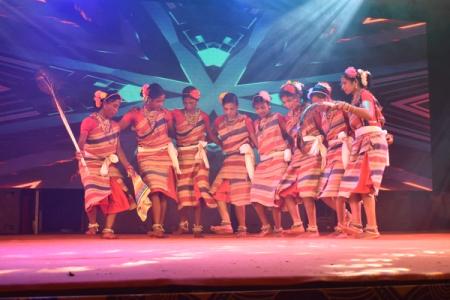 Representing the tribal heritage of southern Odisha, Koraputia (Gadaba) dance was presented in association with Bangla Natak Dot Com and Axis Bank Foundation. Performed by indigenous communities such as the Gadaba, Kondh, and Paraja, these dances are deeply connected to nature, agrarian cycles, and communal rituals.
Group formations, rhythmic repetition, live percussion, and symbolic costumes reflected collective identity, ecological wisdom, and ancestral memory. As a living tradition, Koraputia dance embodies cultural resilience and continuity.
Representing the tribal heritage of southern Odisha, Koraputia (Gadaba) dance was presented in association with Bangla Natak Dot Com and Axis Bank Foundation. Performed by indigenous communities such as the Gadaba, Kondh, and Paraja, these dances are deeply connected to nature, agrarian cycles, and communal rituals.
Group formations, rhythmic repetition, live percussion, and symbolic costumes reflected collective identity, ecological wisdom, and ancestral memory. As a living tradition, Koraputia dance embodies cultural resilience and continuity.
Kharsawan Chhau: Subtle Expression and Sculptural Grace
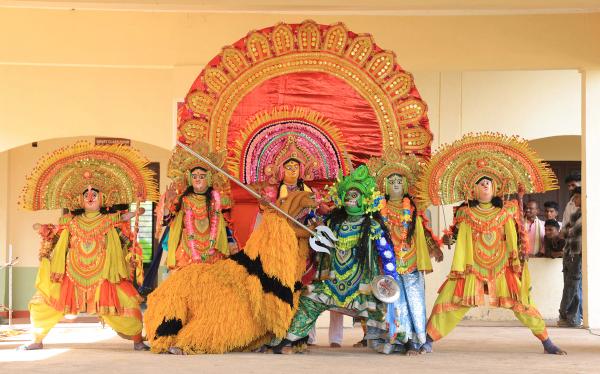
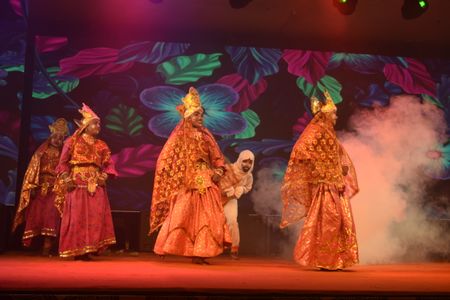 Kharsawan Chhau is a refined and lyrical style of the Chhau dance tradition practised in the Seraikella–Kharsawan region of present-day Jharkhand. Rooted in royal court culture and enriched by indigenous folk and tribal influences, this form represents a sophisticated synthesis of martial discipline, aesthetic restraint, and expressive storytelling.
Unlike the mask-based Chhau traditions found in other regions, Kharsawan Chhau is traditionally performed without masks, placing primary emphasis on facial expression, eye movements, and subtle body articulation. The absence of masks allows for nuanced abhinaya, demanding a high degree of control, sensitivity, and technical mastery from the performer. Grace, balance, and sculptural clarity define the movement vocabulary, with an emphasis on lyrical flow rather than overt athleticism.
Kharsawan Chhau is a refined and lyrical style of the Chhau dance tradition practised in the Seraikella–Kharsawan region of present-day Jharkhand. Rooted in royal court culture and enriched by indigenous folk and tribal influences, this form represents a sophisticated synthesis of martial discipline, aesthetic restraint, and expressive storytelling.
Unlike the mask-based Chhau traditions found in other regions, Kharsawan Chhau is traditionally performed without masks, placing primary emphasis on facial expression, eye movements, and subtle body articulation. The absence of masks allows for nuanced abhinaya, demanding a high degree of control, sensitivity, and technical mastery from the performer. Grace, balance, and sculptural clarity define the movement vocabulary, with an emphasis on lyrical flow rather than overt athleticism.
Sacred Spaces as Living Cultural Centres
The Cultural Festival at Chettikulangara Devi Temple powerfully demonstrated how sacred spaces can function as vibrant centres of cultural expression. By integrating ritual practices with classical, folk, and tribal traditions, the festival reaffirmed the deep interconnection between spirituality, community life, and artistic heritage. The diverse performances highlighted the richness of India’s intangible cultural heritage and affirmed that tradition is not a static inheritance, but a living and evolving practice. Set within a sacred environment, the festival reinforced the enduring role of temples as spaces of cultural continuity, collective memory, and creative renewal for future generations.